
More marketing activity does not automatically mean more useful customer inquiries. A clear plan starts by identifying where people discover your business, what they need to know before choosing you, and where your current path loses them. Kris Chislett works with businesses seeking coordinated marketing rather than disconnected campaigns. For companies in Apopka, FL, a Marketing Agency can help assess the fit between business goals, audience, channels, and measurement before deciding what to prioritize.
This service may suit small and medium-sized businesses, professional services, ecommerce brands, and service-based companies that need a more deliberate approach to reaching and engaging customers. The right scope depends on the challenge: improving search visibility, organizing paid advertising, clarifying messaging, or connecting marketing activity to a more useful customer journey. It is not a promise of rankings, revenue, traffic, or lead volume. The purpose is to set informed priorities and evaluate progress with measures that relate to the business objective.
Kris Chislett’s approach is collaborative: ideas are developed with clients, not in isolation. That means discussing what the business offers, who it serves, which marketing resources are already in place, and what a qualified outcome looks like. Before committing to work, you should be able to understand the proposed focus, what information or access is needed, and how progress will be reviewed. A conversation can establish whether ongoing marketing support fits your current needs or whether a narrower next step makes more sense. A marketing agency apopka fl can help identify where local customers discover your business and which questions they need answered before choosing you. With that insight, you can focus your marketing on attracting more relevant inquiries rather than simply increasing activity.
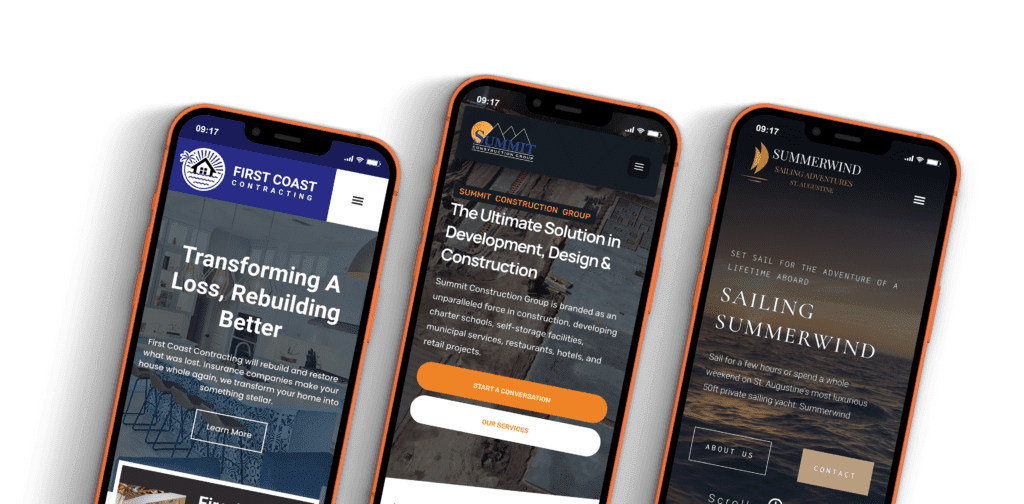
Creating an industry-leading website is about much more than “making it look pretty.” Before we start any website build, we always take a look at what your competitors are doing, establish your audience, and define your goals. This makes sure we deliver a site that not only speaks directly to your customer but makes you the obvious choice over the competition.
We’re on a mission to craft dynamic web solutions that blaze a clear trail, guiding your audience straight to your call to action. It’s all tailored just for you – captivating content, sleek design, and applications like custom databases or customer web portals. Throughout this dynamic journey, you’ll be at the forefront, ensuring we align with your business goals.
A great website is never finished, and we make sure we always build in a way that allows you to update your own content (with free training provided.) But you don’t have to do this alone! Our team of experts will help you get the most out of your online presence and make ourselves available to discuss further marketing efforts.
More channels can create more complexity if each one is managed without a shared objective. A business might be investing time in social posts while its website leaves basic questions unanswered, or paying for clicks without a clear way to assess whether those visitors are a good fit. These situations do not prove that a particular channel is failing; they are signals to examine the whole path from discovery to inquiry or purchase.
The stakes are practical. Without agreed goals and consistent tracking, it can be difficult to distinguish useful activity from numbers that look impressive but do not inform a decision. Clicks and impressions show exposure or interaction, not necessarily qualified demand or business growth. A thoughtful marketing plan connects channel choices to audience needs, landing-page experience, and the actions the business wants customers to take, while acknowledging what available data can and cannot show.
A change in business priorities, a new offer, an underperforming campaign, or uncertainty about where to spend limited marketing time can all prompt a review. The first step is not automatically adding another platform or increasing spend. It is to clarify the problem, check what evidence is available, and decide whether the gap calls for strategy, implementation, measurement improvements, or a combination of those.
A useful engagement moves through decisions in a clear order, rather than treating every marketing tactic as a starting point. First, the business and marketing context are discussed: audience, offer, existing channels, current concerns, and the outcome the work is intended to support. You may need to share relevant website or platform access, existing campaign information, brand materials, and any constraints that affect the plan.
Next comes scope and prioritization. The proposed work should make clear which marketing activities are being addressed, what deliverables are expected, what depends on client input, and how progress will be assessed. Depending on the agreed need, work may involve search visibility, paid advertising, content or messaging, conversion paths, and tracking. The specific mix is determined by the business problem, not assumed in advance. Changes to scope or additional work should be discussed before they are treated as part of the engagement.
Implementation follows the agreed priorities, with communication around decisions, required inputs, and review points. Timing depends on the scope, access to accounts and materials, approval needs, and the work involved, so a fixed completion date cannot be assumed without those details. After implementation, performance should be reviewed against the agreed goals and the limits of the available data. That review can inform what to adjust, continue, or pause; it cannot guarantee a particular commercial result.
Experience and qualifications offer useful context, but they do not replace a clear plan. Kris Chislett was founded in 2010 and holds Google Partner and Meta Business Partner status, along with HubSpot Certified and SEMrush Certified credentials. These qualifications relate to recognized marketing platforms and tools; they are not guarantees of campaign performance. The practical value comes from applying relevant knowledge to the agreed business goals and explaining the reasoning behind recommendations.
The working relationship is intended to be collaborative. Clients contribute business knowledge, timely decisions, access to relevant materials, and feedback; the marketing work translates those inputs into planned activity and reviewable deliverables. This shared responsibility matters because strategy depends on accurate information about the offer, audience, and operational limits. Clear communication helps surface assumptions early and keeps the work aligned as priorities become clearer.
Measurement should support decisions, not serve as decoration. Depending on the project, useful review may include visibility, engagement, inquiries, conversion actions, or other agreed indicators. Each has limits: platform attribution can be incomplete, and an increase in activity does not by itself establish a corresponding increase in revenue or lead quality. The goal is to use available evidence carefully, explain uncertainty, and make the next decision more informed.
The start and completion timing depend on the agreed scope, access, materials, approvals, and work involved. Kris Chislett typically responds within a few hours during business days, but that response time is not a project completion estimate. Confirm milestones and client responsibilities before work begins.
Start by naming the business problem and the outcome you want the work to support. Then clarify deliverables, channels, access requirements, client inputs, and how progress will be reviewed. If priorities change, discuss the effect on scope and timing before adding work.
Kris Chislett states that client and customer information is handled confidentially and used solely to deliver agreed marketing. Share only information needed for the work, and ask how account access or sensitive materials should be provided. Applicable privacy requirements depend on the project and the information involved.
Availability is Monday to Friday, with flexible scheduling for ongoing clients. Response is typically within a few hours during business days. Specific meeting and work schedules should be confirmed when discussing the engagement.
Cost depends on the agreed scope, channels, implementation needs, and level of ongoing support. No standard price is provided here, so discuss the business need and request a clear outline of deliverables and responsibilities before deciding.
These services are delivered digitally and do not require insurance involvement. If your organization has its own vendor or data-handling requirements, raise them during the scope discussion so they can be considered before work starts.
Every business should have a strong online presence. If you don’t, you’re leaving money on the table and sabotaging your own success. That’s where we come in. Let us help. In the ever-changing digital landscape, our coordinated marketing solutions help businesses navigate through the chaos, position themselves for success, and emerge as industry leaders.