
Before spending on ads, check three things: Can you describe the customer you want to reach? Does your landing page make the next step clear? Can you track what happens after someone clicks? If one answer is uncertain, a campaign may need planning before launch. Kris Chislett provides Pay per Click Pembroke Pines FL businesses can evaluate against those practical questions, with campaign planning shaped around the business, its audience, and its objectives.
Pay-per-click advertising places paid listings in front of people based on factors such as search terms, audience settings, and campaign objectives. The work can include account and campaign planning, audience and keyword selection, ad development, landing-page recommendations, conversion tracking, and ongoing review. The exact scope depends on what is already in place and what the business needs. It is a fit for small and medium-sized businesses, professional services, ecommerce brands, and service-based companies that can define a useful action for an ad to support.
The aim is not to buy clicks for their own sake. A campaign should make it possible to assess whether the right people are reaching a relevant page and taking a meaningful next step, such as submitting an inquiry or completing a purchase. Those signals still need context: tracking can be incomplete, and an attributed conversion does not by itself prove that advertising caused broader business growth. A clear measurement plan helps separate useful evidence from activity that only looks promising. A pay per click pembroke pines fl campaign works best when you know your target customer, provide a clear next step on your landing page, and track what visitors do after clicking. Check these essentials before increasing your ad spend.
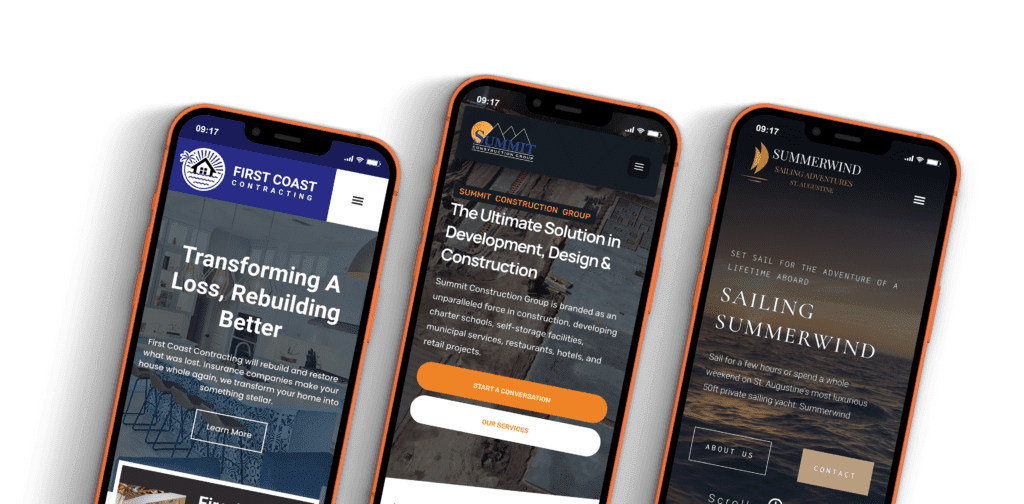
Creating an industry-leading website is about much more than “making it look pretty.” Before we start any website build, we always take a look at what your competitors are doing, establish your audience, and define your goals. This makes sure we deliver a site that not only speaks directly to your customer but makes you the obvious choice over the competition.
We’re on a mission to craft dynamic web solutions that blaze a clear trail, guiding your audience straight to your call to action. It’s all tailored just for you – captivating content, sleek design, and applications like custom databases or customer web portals. Throughout this dynamic journey, you’ll be at the forefront, ensuring we align with your business goals.
A great website is never finished, and we make sure we always build in a way that allows you to update your own content (with free training provided.) But you don’t have to do this alone! Our team of experts will help you get the most out of your online presence and make ourselves available to discuss further marketing efforts.
In Pembroke Pines, a business may be weighing paid ads because organic visibility is not bringing enough qualified inquiries, a seasonal offer needs exposure, or an existing campaign is generating clicks without clear business value. These situations call for different decisions. More traffic may not help when the page is confusing, the offer is poorly defined, or the campaign is reaching people outside the intended audience.
Budget is only one part of the decision. Before launch, consider how much you can allocate to media, what a qualified lead or sale means to your business, and whether someone can respond to incoming inquiries. Ad spend is paid to the advertising platform, while campaign planning and management are separate service considerations. Costs depend on scope, platform, competition for the audience, account condition, and the amount of ongoing optimization required; no specific fee or outcome should be assumed without discussing the work.
Paid advertising is not a substitute for a workable offer, a useful landing page, or accurate measurement. If those pieces are not ready, the sensible first step may be to identify what needs attention rather than launch immediately. A review can clarify whether PPC is appropriate now, what should be improved first, and which results can realistically be measured with the available data.
1. Define the objective and fit. The discussion starts with the audience, offer, service area, budget considerations, and the action the campaign should support. Bring any existing campaign information, website links, and measurement concerns so the review can focus on real constraints rather than assumptions.
2. Plan the campaign and destination. Based on the agreed scope, planning may address platform choice, targeting, keywords where relevant, ad messaging, and the landing-page path. The page should make the offer and next step understandable. Any recommendations depend on the current website and account setup; this service does not automatically include a website rebuild or every technical change.
3. Prepare measurement and launch. Before ads go live, agree on which actions to track and check whether the available setup can record them. Tracking quality depends on the website, platform configuration, consent choices, and any third-party tools involved. The business may need to provide account access, approve copy and budget, supply offer details, and coordinate website changes.
4. Review and adjust. Once campaign data is available, review delivery, search or audience relevance, landing-page behavior, and tracked actions. Early data can be limited and should not be treated as proof of profitability. Timing varies with account access, approvals, campaign complexity, and readiness of the page and tracking; no launch date or performance threshold is guaranteed.
Kris Chislett was founded in 2010. The supplied credentials include Google Partner, Meta Business Partner, HubSpot Certified, and SEMrush Certified. These are useful indicators of platform and marketing training, not a promise of particular campaign results. The working approach is collaborative: campaign decisions should be discussed with the client, including objectives, tradeoffs, approvals, and what the available reporting can and cannot show.
The business identifies GDPR, CCPA, and CAN-SPAM as relevant compliance standards. Their application depends on the campaign, audience, data collected, and communications involved. Ad management does not replace legal advice or establish that a client’s website, consent process, email practices, or campaign materials comply. Clients remain responsible for their business obligations and should seek qualified advice where needed.
Client and customer information is handled confidentially and used solely to deliver agreed marketing, according to the supplied privacy statement. Access to accounts and data should be limited to what the work requires. Insurance coordination is not part of the service: it is delivered digitally and does not require insurance involvement. As with any advertising work, platform decisions, market response, tracking limitations, and client approvals can affect outcomes; no ranking, revenue, traffic, or lead-volume guarantee is offered.
Pay-per-click uses paid placements to reach selected audiences, while SEO works to improve unpaid search visibility over time. PPC may suit a defined offer or a need to test messaging, but it requires an advertising budget and a relevant landing page. The better fit depends on your goals, readiness, and ability to measure meaningful actions.
The cost depends on campaign scope, platform, account condition, landing-page needs, and the level of ongoing review. Advertising spend is separate from management work, and the appropriate budget depends on the business and campaign objectives. Discussing your current setup is the practical way to establish what work is needed.
Timing varies with account access, campaign complexity, approvals, landing-page readiness, and tracking setup. A campaign should not launch until its objective, destination, and measurement approach are sufficiently clear. A specific schedule can be discussed after those dependencies are understood.
Yes, the service is delivered digitally and can be discussed with businesses serving Pembroke Pines. Campaign targeting should reflect the business’s actual service area or customer reach. The page does not imply a local office or team.
Availability is Monday to Friday, with flexible scheduling for ongoing clients. Responses typically arrive within a few hours during business days, though response time does not guarantee a meeting or launch date.
Every business should have a strong online presence. If you don’t, you’re leaving money on the table and sabotaging your own success. That’s where we come in. Let us help. In the ever-changing digital landscape, our coordinated marketing solutions help businesses navigate through the chaos, position themselves for success, and emerge as industry leaders.