
Before hiring an SEO Expert Palm Beach FL businesses should be able to answer a few basic questions: What do you want search to help accomplish? Which pages or products matter most? Can you access your website and performance data? Clear answers make it easier to choose work that fits, rather than buying a vague promise of better rankings.
Kris Chislett provides SEO strategy and optimization for small and medium-sized businesses, professional services, ecommerce brands, and service-based companies. The work can address technical barriers, page content, site structure, and measurement, depending on what an initial review shows. SEO aims to improve relevant search visibility and attract qualified organic visitors; it cannot guarantee specific rankings, traffic, leads, or revenue.
This service is a good fit when your website is important to customer acquisition but search priorities feel unclear, organic traffic is not reaching the right pages, or a site change has raised questions about visibility. It may not be the right first step if you need immediate demand or a guaranteed volume of leads. In that case, discuss the timing and role of SEO alongside your other marketing needs before committing. Before hiring an seo expert palm beach fl, define what you want search to accomplish and identify the pages or products that matter most. Make sure you can provide access to your website analytics and other relevant tools so the expert can assess your starting point.
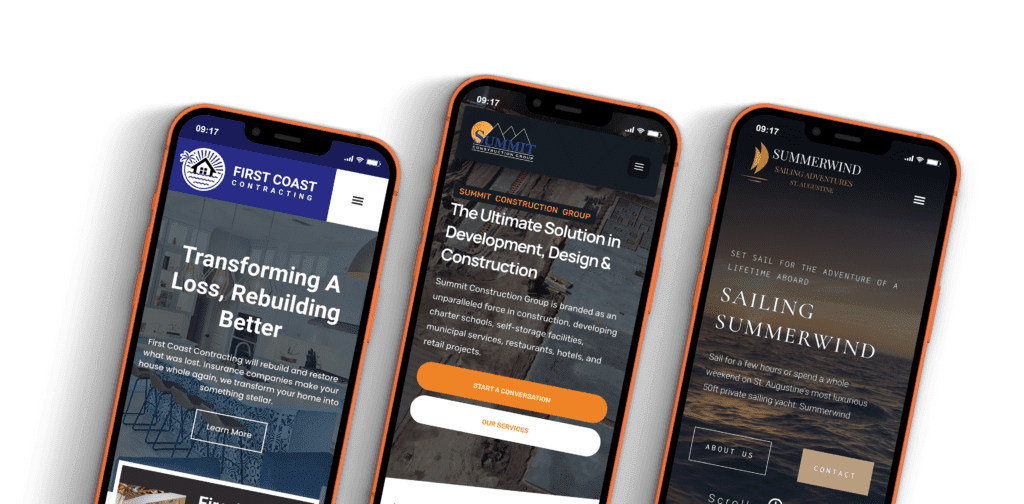
Creating an industry-leading website is about much more than “making it look pretty.” Before we start any website build, we always take a look at what your competitors are doing, establish your audience, and define your goals. This makes sure we deliver a site that not only speaks directly to your customer but makes you the obvious choice over the competition.
We’re on a mission to craft dynamic web solutions that blaze a clear trail, guiding your audience straight to your call to action. It’s all tailored just for you – captivating content, sleek design, and applications like custom databases or customer web portals. Throughout this dynamic journey, you’ll be at the forefront, ensuring we align with your business goals.
A great website is never finished, and we make sure we always build in a way that allows you to update your own content (with free training provided.) But you don’t have to do this alone! Our team of experts will help you get the most out of your online presence and make ourselves available to discuss further marketing efforts.
A website can look polished and still be difficult for search engines or customers to navigate. Important service pages may be hard to find, page topics may not match what prospective customers search for, or technical issues may interfere with indexing. Starting with the obstacle helps avoid spending time on activity that does not support the business goal.
Depending on the site and priorities, SEO work may include reviewing search performance, researching relevant queries, assessing page structure and content, identifying technical issues, and setting recommendations in order of importance. Implementation can involve updating titles and headings, improving internal links, refining useful page copy, or coordinating technical changes. The exact scope depends on access, site platform, existing content, and whether your staff or another provider will make changes.
Organic search is a long-term channel, not an emergency switch. Search engines control crawling and ranking, and results can vary with competition, site changes, and the quality of available data. A sound plan treats rankings and clicks as diagnostic signals, then checks whether relevant visitors engage with important pages and whether tracked inquiries or sales provide useful evidence.
Unclear access or priorities can slow an SEO engagement, so the first step is agreeing on what the business needs to learn or improve. The work is collaborative: you share context about your customers, services, products, and site constraints, while Kris Chislett uses that input to shape practical recommendations.
1. Define the goal and scope. Discuss the pages, products, audience, and business outcomes that matter, then confirm what is and is not part of the engagement. 2. Review the evidence. With appropriate access, assess available website and search data, content, structure, and technical considerations. 3. Prioritize actions. Receive recommendations organized around relevance and feasibility, rather than an unranked list of tasks.
4. Implement or coordinate agreed changes. Responsibility for publishing updates should be clear in advance, since it may depend on your platform, access, and internal resources. 5. Review what changed. Use available search and website data to assess visibility, relevant visits, and meaningful actions. There is no fixed result date: audits, recommendations, and implementation take different amounts of time, and search engines may take additional time to reflect changes. Ongoing clients can arrange flexible scheduling.
SEO decisions are stronger when they connect to the business, not just a checklist of technical tasks. Kris Chislett was founded in 2010 and describes its approach as collaborative: clients contribute their knowledge of the business, while the marketing work turns that context into focused priorities. That experience is a reason to ask how recommendations will be explained and who will be responsible for carrying them out.
The supplied credentials include Google Partner, Meta Business Partner, HubSpot Certified, and SEMrush Certified. These credentials reflect experience across marketing platforms and tools; they are not a guarantee of search placement or business results. For an SEO engagement, ask which data sources and tools will inform the work, what access is needed, and how findings will be translated into actions your business can evaluate.
Palm Beach FL businesses can work with Kris Chislett through digital service delivery. The local relevance comes from understanding your own customers, service area, products, and the pages you want searchers to find, not from claiming a local office or completed local projects. Nearby landmarks or neighborhood references should appear in site content only when they genuinely help customers understand where and how you serve.
Choose based on your goals, timing, and available resources. SEO focuses on organic visibility and can support longer-term discovery, while paid search uses advertising placements that run under a campaign budget. The channels can complement each other, but neither guarantees leads or sales.
Cost depends on your website, the number and type of pages, the depth of review, and whether implementation or ongoing support is needed. Share your goals and site details to discuss a suitable scope; no fixed price is provided here.
Avoid choosing based on guaranteed rankings, publishing pages without a clear customer purpose, or making major site changes without considering search impact. Ask for specific deliverables, a clear division of implementation responsibilities, and an explanation of how progress will be assessed.
Kris Chislett states that client and customer data, communications, and business information are handled confidentially and used only to deliver agreed marketing services. Discuss the access required and any data-handling questions before sharing account credentials or sensitive information.
Before work starts, clarify whether implementation is included, handled by your team, or coordinated with another provider. After agreed changes, review available search and website data to understand visibility and relevant actions, keeping in mind that search engines may take time to reflect updates.
Every business should have a strong online presence. If you don’t, you’re leaving money on the table and sabotaging your own success. That’s where we come in. Let us help. In the ever-changing digital landscape, our coordinated marketing solutions help businesses navigate through the chaos, position themselves for success, and emerge as industry leaders.