
A drop in relevant inquiries or a website that barely appears for important searches can make the next marketing decision feel urgent. SEO Bradenton FL support from Kris Chislett is designed to identify practical ways to improve organic visibility and help the right people find your business. The work starts with your goals, current website, and the searches that matter to your customers, not a promise of instant rankings.
Search engine optimization can suit small and medium-sized businesses, professional services, ecommerce brands, and service-based companies that want to build a more useful path from search to action. The work may involve reviewing site structure, page content, search intent, technical barriers, and measurement. The priorities depend on what the review finds and what your business can realistically support.
SEO is not a substitute for a clear offer or a usable website. It can help make relevant pages easier to discover, but search engines and customer behavior are outside any provider’s control. A sensible engagement sets goals, establishes what can be measured, and makes improvements in stages so you can judge whether the work is a fit. When relevant inquiries decline or your website struggles to appear in important searches, seo bradenton fl support from Kris Chislett can help identify practical ways to improve visibility and attract local customers. It’s designed to help you make informed marketing decisions based on your business goals.
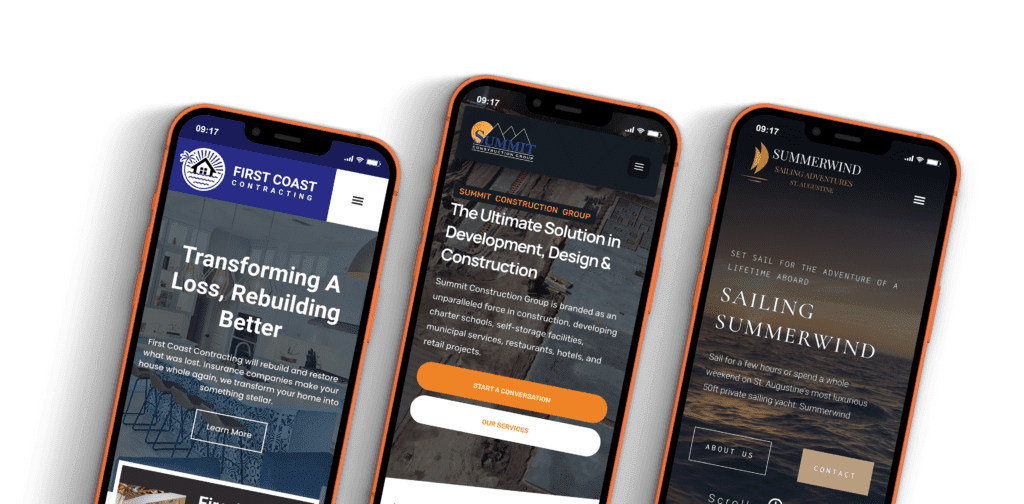
Creating an industry-leading website is about much more than “making it look pretty.” Before we start any website build, we always take a look at what your competitors are doing, establish your audience, and define your goals. This makes sure we deliver a site that not only speaks directly to your customer but makes you the obvious choice over the competition.
We’re on a mission to craft dynamic web solutions that blaze a clear trail, guiding your audience straight to your call to action. It’s all tailored just for you – captivating content, sleek design, and applications like custom databases or customer web portals. Throughout this dynamic journey, you’ll be at the forefront, ensuring we align with your business goals.
A great website is never finished, and we make sure we always build in a way that allows you to update your own content (with free training provided.) But you don’t have to do this alone! Our team of experts will help you get the most out of your online presence and make ourselves available to discuss further marketing efforts.
A website can look complete and still fail to connect searchers with the right service or product. Pages may be difficult to find, overlap in purpose, answer a different question than the visitor has, or offer no clear next step. In those cases, more visits alone may not solve the problem; the priority is to make the site more relevant and useful for qualified prospects.
The stakes are practical: potential customers may not discover a suitable page, while the business has little clarity about which search activity supports meaningful inquiries or sales. A review can help separate issues that are within the site’s control from factors such as changing search results, limited data, or customer demand. Clicks and impressions can indicate visibility, but they do not prove business growth by themselves.
A review may be worth considering after a website redesign, a change in services, a decline in organic inquiries, or uncertainty about what current SEO work is accomplishing. It is also reasonable to pause before investing if your offer, site content, or measurement setup needs attention first. The goal is to identify a useful next move, not to prescribe ongoing work automatically.
A clear sequence makes the work easier to assess. First, we discuss your business goals, audience, website, current concerns, and any previous SEO activity. You provide access or materials only when they are needed and agreed upon. This conversation helps define the questions the work should answer and avoids treating every website as if it has the same needs.
Second, the site and its search context are reviewed to identify relevant opportunities and obstacles. Depending on the agreed scope, this can include page content, site organization, technical considerations, search intent, and available performance data. Third, findings are turned into prioritized recommendations or agreed implementation work, with responsibilities clarified so you know what is being handled and what may require your input.
Fourth, progress is reviewed against the agreed objectives using available analytics and search data. Timing depends on the site’s condition, the amount of work, access to information, and how quickly recommendations can be implemented. SEO is ongoing rather than a guaranteed quick fix; search engines may take time to reflect changes, and no specific ranking, traffic, lead, or revenue result can be promised.
Kris Chislett was founded in 2010, and the business describes its approach as collaborative: useful ideas develop through working with clients, not in isolation. For SEO, that means grounding recommendations in your business context and making the reasoning behind priorities understandable, so you can decide what to act on.
The supplied credentials include Google Partner, Meta Business Partner, HubSpot Certified, and SEMrush Certified. These qualifications provide relevant context, but they are not a guarantee of search performance. SEO decisions should still be judged by the agreed work, the quality of the analysis, and whether reporting helps you understand what is changing and what remains uncertain.
Measurement should connect search activity to the outcomes your business can observe, such as relevant inquiries or ecommerce actions where tracking is available. Attribution can be incomplete, and a change in clicks does not establish that SEO caused a change in sales. Reviews should account for those limits rather than presenting visibility metrics as proof of return.
SEO cost depends on your website, goals, and the amount of analysis or implementation required. Ask for a clearly defined scope and confirm which recommendations, implementation tasks, and reporting are included before deciding.
Neither channel is automatically safer or better; they serve different needs. SEO focuses on organic visibility and can take time to show changes, while paid advertising requires a budget for placements and depends on campaign setup and tracking. The right choice depends on your goals, timing, resources, and ability to measure useful outcomes.
Have your website address, main services or products, target customers, and current concerns ready. If available, bring relevant analytics or search data and note any recent site changes. You do not need to share sensitive customer information for an initial discussion.
The next step depends on the agreed scope and who will implement the recommendations. You can clarify priorities, responsibilities, and how progress will be reviewed. Search changes are not guaranteed, so ongoing assessment should consider relevant business actions as well as visibility metrics.
Kris Chislett states that client and customer information is handled confidentially and used solely to deliver agreed marketing services. Share only the access and information needed for the work, and discuss any specific data-handling requirements before providing sensitive materials.
Every business should have a strong online presence. If you don’t, you’re leaving money on the table and sabotaging your own success. That’s where we come in. Let us help. In the ever-changing digital landscape, our coordinated marketing solutions help businesses navigate through the chaos, position themselves for success, and emerge as industry leaders.