
A prospective customer in Jupiter finds your site, but cannot tell what you offer, whether you serve their needs, or what to do next. That hesitation can cost a business a qualified inquiry or a completed purchase. Kris Chislett provides Web Design in Jupiter, FL for small and medium-sized businesses, professional services, ecommerce brands, and service-based companies that need a clearer path from first visit to action.
The work is more than choosing colors or refreshing a homepage. It can involve organizing pages, shaping useful content, improving navigation, and making calls to action easier to follow. The right scope depends on what is not working and what the site needs to do. A focused redesign may suit a business with sound content but a confusing structure; a larger project may be appropriate when the platform, content, or customer journey also needs attention.
Web design in Jupiter, FL is a practical fit when the current site no longer reflects the business, is difficult to use on common devices, or makes it hard to explain services and products. The goal is a website that supports the decisions visitors need to make, not a promise of a particular ranking, traffic increase, or revenue result. Search visibility and conversion performance depend on multiple factors beyond design, so the project should define useful measures and realistic expectations from the outset. Professional web design in Jupiter, FL can clarify what your business offers, show prospective customers how you can help, and guide them toward a clear next step.
In Jupiter, a website may be the first detailed explanation a potential customer sees, whether they arrive from a search result, an advertisement, or a referral. If service details are buried, pages feel inconsistent, or contact options are hard to find, visitors must work too hard to understand the offer. Ecommerce sites face a related challenge: product information and the route to checkout need to be understandable without unnecessary detours.
A design project can address page structure, visual hierarchy, navigation, content presentation, and conversion paths. The exact deliverables depend on the agreed scope; copywriting, photography, custom development, ecommerce configuration, and ongoing maintenance should be discussed rather than assumed. Platform choice also matters. The existing system may be suitable to improve, or a different platform may better fit the business’s content, selling needs, and ability to maintain the site.
Before committing, consider whether the main issue is design, content, platform limitations, or a combination. A new look alone will not fix unclear offers or missing information. Likewise, clicks and impressions can show activity but do not by themselves establish that a website is producing qualified inquiries or sales. Agree on the intended visitor actions and the available measurement before work begins.
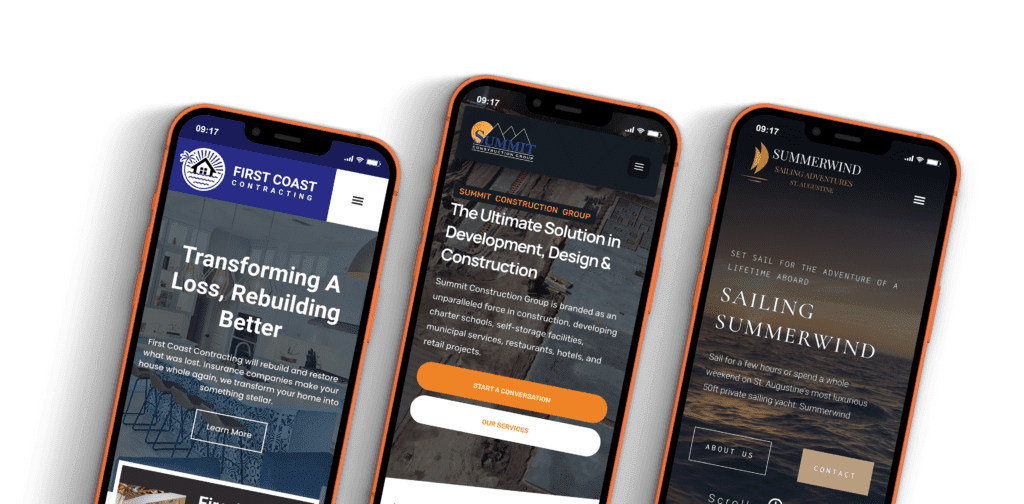
For Jupiter businesses, a useful project begins with shared decisions, not a fixed template. The steps below describe a practical framework; the exact deliverables, schedule, and review points are set according to the project scope and the information available. Timing can depend on page count, platform requirements, content readiness, integrations, and how quickly decisions and feedback are provided.
1. Define the need. Discuss the current site, audience, business goals, problem pages, and what a successful visitor action would look like. Bring access to the existing website and any relevant brand or content materials when available. 2. Set the scope. Agree on the pages, platform, design work, content responsibilities, technical needs, and what is outside the project. This step helps avoid assumptions about features or launch support.
3. Shape and review. Develop the agreed page structure and design direction, then gather feedback at the planned review points. The client’s timely input on content, accuracy, and approvals helps keep work moving. 4. Prepare for launch. Confirm the agreed pages and functionality, coordinate the launch tasks included in scope, and clarify any handoff or follow-up support. No delivery date should be assumed until the scope, dependencies, and schedule have been discussed.
After launch, the site may still need updates, content additions, or maintenance as the business changes. Those ongoing tasks are not automatically part of a design engagement; confirm what support is available and how it will be arranged. If search visibility is a goal, identify what can be tracked and remember that design is only one element affecting organic discovery and business outcomes.
Kris Chislett was founded in 2010 and describes its approach as collaborative: “A Human Approach With Remarkable Returns.” That means the project is shaped through discussion with the client rather than treated as a design exercise in isolation. Clear communication about goals, responsibilities, and approval points gives both sides a better basis for evaluating the work and deciding what should happen next.
The supplied credentials include Google Partner, Meta Business Partner, HubSpot Certified, and SEMrush Certified. These credentials provide relevant context for a business whose website may connect with search, advertising, or marketing tools; they are not a guarantee of website performance, rankings, leads, or sales. The design scope should still be judged on whether its proposed pages, platform choices, and customer paths fit the business’s actual needs.
Privacy matters when a website project involves customer or business information. Kris Chislett states that client and customer information is handled confidentially and used solely to deliver agreed marketing services. GDPR, CCPA, and CAN-SPAM are listed in the supplied business information, but the specific legal obligations for a site depend on its features and use. Discuss forms, tracking, email integrations, and any needed legal review as part of defining the work; do not assume design alone establishes compliance.
Confirm the pages, design work, platform tasks, content responsibilities, revisions, and launch support included in the agreed scope. Also ask which items are excluded, such as copywriting, custom development, integrations, or ongoing maintenance. A written scope helps both sides understand what will be delivered.
Cost depends on the project’s pages, platform, content needs, functionality, and launch requirements. The supplied information does not establish a standard price, so discuss your current site and requested work to determine an appropriate scope before evaluating cost.
The schedule depends on the agreed scope, platform needs, content readiness, integrations, and review turnaround. A reliable timeframe can be discussed after those factors are understood; no fixed completion period is stated.
Yes, the service can be discussed remotely for a Jupiter business. Availability is Monday to Friday, with flexible scheduling for ongoing clients, and responses typically arrive within a few hours during business days.
Every business should have a strong online presence. If you don’t, you’re leaving money on the table and sabotaging your own success. That’s where we come in. Let us help. In the ever-changing digital landscape, our coordinated marketing solutions help businesses navigate through the chaos, position themselves for success, and emerge as industry leaders.