
A website can look polished and still leave visitors unsure what to do next. Kris Chislett has worked in digital marketing since 2010, bringing a collaborative approach to Web Design Safety Harbor FL businesses can evaluate against their actual goals. The work begins with understanding what customers need to know, what the business needs the site to accomplish, and where the current experience creates friction.
This service may suit small and medium-sized businesses, professional services, ecommerce brands, and service-based companies that need a clearer online experience. The right scope depends on the site’s purpose: explaining an offer, helping visitors compare options, guiding them to make contact, or supporting product discovery. A conversation can establish whether a redesign, focused improvements, or a different next step makes sense.
must remove. Need output valid. Continue paragraphs. Need all schema fields. Word count constraints conflict user asks 2-4 sections, schema 4-7 sections and 1600-2400, but can provide 4 sections ~400 words each. FAQ 4. Keyword total 2-4 including meta title/meta desc/h1, body. exact phrase in H2 too critical, total 2-4 all content. use title, desc, paragraph opening, H2 =4. Need no em dash. 4 sections 3 paragraphs each 100-150 words, ~1200 plus FAQs, less target 1600 but schema paragraphs 3-5 100-150. Need 4 sections x3x100=1200, FAQs. Could do 4 sections x4x100 =1600. But semantic blueprint seven sections conflicts user asks 2-4 sections; schema says 4-7. four sections. Need include sections roles compactly combined. Fix. Need claims exact lines in claims_used. Output JSON. Could generate ~1600 words, 4 sections 4 paragraphs each 100 words. time. Ensure no un
must remove. Continue paragraphs. Need all schema fields. Word count constraints conflict user asks 2-4 sections, schema 4-7 sections and 1600-2400, but can provide 4 sections ~400 words each. FAQ 4. Keyword total 2-4 including meta title/meta desc/h1, body. exact phrase in H2 too critical, total 2-4 all content. use title, desc, paragraph opening, H2 =4. Need no em dash. 4 sections 3 paragraphs each 100-150 words, ~1200 plus FAQs, less target 1600 but schema paragraphs 3-5 100-150. Need 4 sections x3x100=1200, FAQs. Could do 4 sections x4x100 =1600. But semantic blueprint seven sections conflicts user asks 2-4 sections; schema says 4-7. four sections. Need include sections roles compactly combined. four sections 4 paragraphs each 100 words. Could generate ~1600 words, 4 sections 4 paragraphs each 100 words. time. Ensure no un
Need restart final valid. Need 4 sections. Focus phrase occurrences 4. meta title exact, desc exact, first paragraph, H2. H1 no phrase. 4 sections x3 paragraphs ~100 words =1200. okay. Include 4 FAQ. claims provenance exact. Could write concise. A polished website should also guide visitors toward clear next steps, whether that means requesting a quote or getting in touch. With a collaborative approach to web design safety harbor fl, Kris Chislett helps businesses create sites that look professional and make it easier for customers to take action.
Creating an industry-leading website is about much more than “making it look pretty.” Before we start any website build, we always take a look at what your competitors are doing, establish your audience, and define your goals. This makes sure we deliver a site that not only speaks directly to your customer but makes you the obvious choice over the competition.
We’re on a mission to craft dynamic web solutions that blaze a clear trail, guiding your audience straight to your call to action. It’s all tailored just for you – captivating content, sleek design, and applications like custom databases or customer web portals. Throughout this dynamic journey, you’ll be at the forefront, ensuring we align with your business goals.
A great website is never finished, and we make sure we always build in a way that allows you to update your own content (with free training provided.) But you don’t have to do this alone! Our team of experts will help you get the most out of your online presence and make ourselves available to discuss further marketing efforts.
In Safety Harbor, a prospective customer may first encounter a business through a phone search, then decide quickly whether the site answers basic questions. If key services, contact details, product information, or next steps are hard to find, the visitor may leave without understanding the offer. A redesign is worth considering when the site no longer reflects the business, performs poorly on smaller screens, or makes routine updates difficult.
A visual refresh alone may not address the underlying problem. Before changing layouts, it helps to identify the pages people rely on, the actions the business wants visitors to take, and any content or functionality that must remain. For example, a professional service might need a clearer path from service descriptions to an inquiry, while an ecommerce brand may need product information and purchase steps to be easier to follow. These are illustrative situations, not client results.
There are tradeoffs to consider. A broader redesign can address structure and content together, but it also requires more decisions and coordination than a limited update. Keeping an existing platform may preserve familiar workflows, while changing platforms can affect content migration, integrations, and ongoing maintenance. The project scope should make those choices visible before work begins rather than treating them as launch-day surprises.
The goal is a usable, coherent site, not a promise of a particular ranking, traffic level, or sales result. Search visibility can be influenced by many factors beyond design, and visits or clicks alone do not prove business impact. A sound evaluation looks at whether visitors can find relevant information and complete intended actions, alongside the analytics and business measures the client already uses.
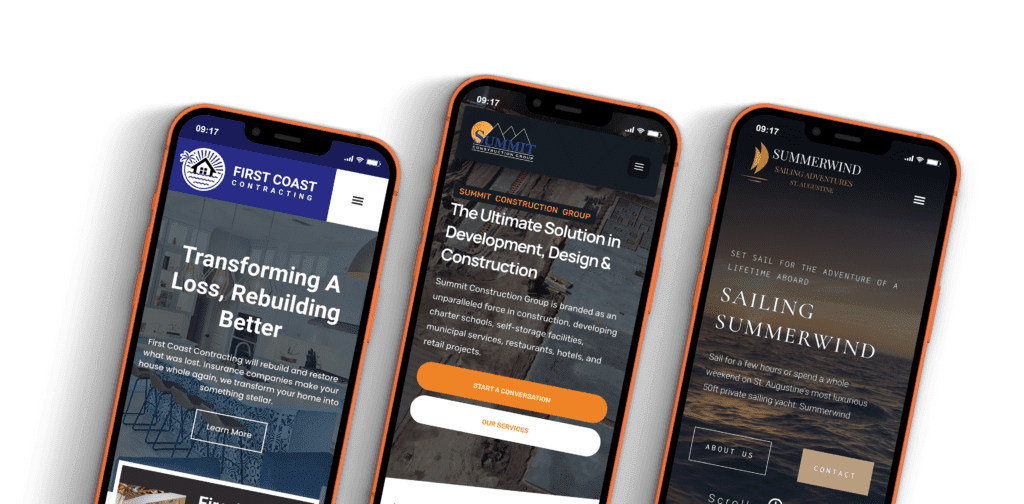
A useful first conversation clarifies the site’s purpose, audience, current platform, required pages, and what is not working. Kris Chislett can then discuss a suitable scope and the information needed to shape it. The project may involve page structure, visual design, content organization, responsive layouts, and conversion paths, depending on the agreed requirements. Specific deliverables and platform choices should be confirmed for the project rather than assumed from a general service description.
Next, the client and designer align on priorities, existing materials, and any functionality or integrations the site needs. The client’s input matters: timely access to brand assets, accurate business information, content decisions, and feedback help keep the work moving. Review points give both sides a chance to resolve questions before they become late-stage changes. The exact number and format of reviews should be agreed as part of the scope.
As design and build work progresses, attention turns to how the pages behave across screen sizes, how visitors move between information and actions, and whether content is clear. Launch preparation can include checking agreed pages and key paths, but the exact checks and any ongoing support must be established in the project plan. Web design does not automatically include copywriting, hosting, platform subscriptions, ongoing maintenance, or marketing campaigns unless those items are expressly agreed.
There is no verified standard turnaround to quote for every project. Timing depends on the number and complexity of pages, platform and integration needs, content readiness, client review time, and any migration requirements. Kris Chislett is available Monday to Friday, with flexible scheduling for ongoing clients. During business days, replies typically arrive within a few hours; that response expectation is not a promise that a project will be completed within a particular period.
For a business based in Safety Harbor, the useful local question is whether its website speaks clearly to the customers it serves, not whether the designer claims a nearby office. The service is delivered digitally, and no local office, local team, or completed Safety Harbor project is being claimed here. Planning can still account for the business’s audience, service area, customer questions, and the practical details visitors need before contacting or buying.
Kris Chislett was founded in 2010 and holds Google Partner, Meta Business Partner, HubSpot Certified, and SEMrush Certified credentials. These qualifications provide context for a digital marketing background; they are not a guarantee of a particular design outcome or a substitute for agreeing on the project’s requirements. The company describes its approach as collaborative, with clients and the team working together to develop ideas and deliver the agreed work.
A hypothetical example helps show how scope can be evaluated: if a service business receives inquiries but visitors cannot tell which service fits them, the project might prioritize clearer service pages, navigation, and contact paths. That is an example of a possible design decision, not a reported client case or verified result. Success measures should be chosen around the business objective and available tracking, while recognizing that attribution and analytics have limitations.
For a qualified next step, share the current website, the main issue you want to address, and any platform or launch constraints. Kris Chislett can respond during business days, typically within a few hours, and discuss availability Monday to Friday. Client and customer information is handled confidentially for the agreed marketing work. Services are digital and do not require insurance involvement; applicable privacy and email-marketing standards include GDPR, CCPA, and CAN-SPAM, as relevant to the work.
Kris Chislett was founded in 2010 and holds Google Partner, Meta Business Partner, HubSpot Certified, and SEMrush Certified credentials. These are relevant digital marketing qualifications, but the project scope and design deliverables should still be confirmed directly.
The cost depends on the project’s page count, design and content needs, platform, integrations, and launch requirements. Request a scope discussion to clarify what is included; no standard price is stated here.
The schedule depends on project complexity, content readiness, platform requirements, and how quickly reviews and decisions are completed. Timing should be discussed after the requirements are understood, since no universal turnaround is promised.
Avoid beginning with visual changes before deciding what the site needs to help visitors understand or do. Also identify essential pages, platform constraints, content responsibilities, and required integrations early so the agreed scope can account for them.
Every business should have a strong online presence. If you don’t, you’re leaving money on the table and sabotaging your own success. That’s where we come in. Let us help. In the ever-changing digital landscape, our coordinated marketing solutions help businesses navigate through the chaos, position themselves for success, and emerge as industry leaders.