
Before investing in a new site or rebuilding an existing one, check three things: can customers understand what you offer, can they complete the next step, and can you maintain the site after launch? If any answer is no, web development in Gulf Breeze, FL may be worth discussing with Kris Chislett. The work is intended for small and medium-sized businesses, professional services, ecommerce brands, and service-based companies that need a website shaped around real customer tasks, not just a visual refresh.
A website can look polished and still create friction. Confusing navigation, outdated content, weak mobile usability, or a form that does not capture the right information can make it harder for a visitor to become a qualified inquiry or customer. Development can address those practical issues through structure, page functionality, content placement, and conversion paths. The right scope depends on what is not working, what the business needs the site to do, and what should remain in place.
Kris Chislett works collaboratively, treating the project as a shared effort rather than a handoff of assumptions. That means clarifying the audience, priorities, existing platform, and desired actions before proposing a build. The goal is a useful, manageable website aligned with the business, while recognizing that performance also depends on factors such as the offer, content, traffic sources, and ongoing upkeep. When evaluating web development in Gulf Breeze, FL, make sure your site clearly explains your services, guides visitors toward the next step, and is easy to maintain after launch. These checks can help you choose a solution that supports your business over time.
A rushed rebuild can replace visible problems with less obvious ones: missing content, broken forms, unclear ownership of site assets, or a launch that disrupts existing customer journeys. The safer first move is to identify what the current site does well, what needs to change, and what must keep working. This is especially useful when a business is adding services, changing its offer, improving an online store, or finding that visitors cannot easily reach the right information.
Not every issue calls for a full rebuild. A focused update may be more appropriate when the platform is sound and only a few pages or functions need attention; broader development may make sense when the structure or technical setup blocks the intended experience. The project scope should spell out the pages, functionality, platform responsibilities, content inputs, and review points. Search visibility can be considered through sound page structure and discoverable content, but no development project can guarantee rankings, traffic, or sales.
Success should be assessed against agreed goals, such as whether key pages work as intended, whether forms capture useful inquiries, or whether customers can complete a purchase path. Analytics can help show interactions, but clicks and impressions alone do not establish business growth. Tracking also depends on correct setup, consent choices, platform behavior, and the quality of the underlying data.
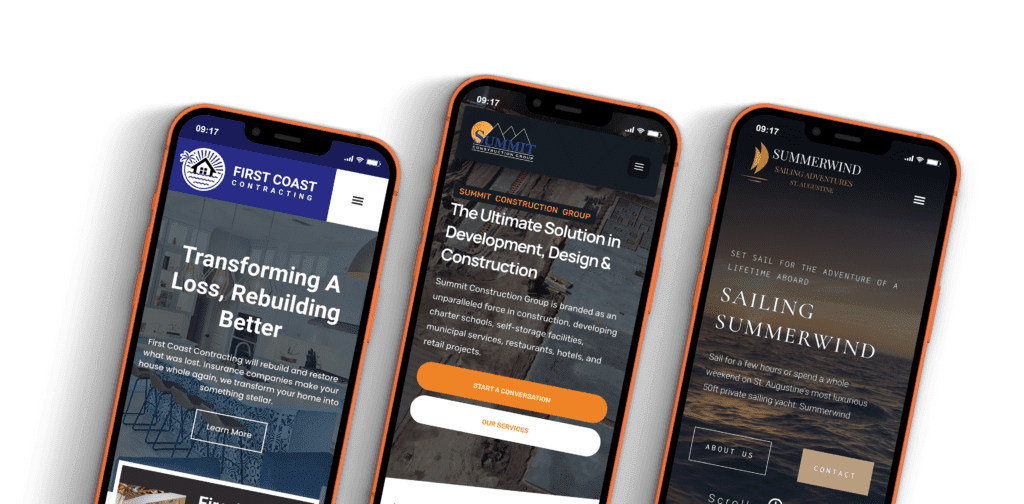
A clear plan is more valuable than a premature launch date. The work begins with a conversation about the business, its audience, the current website, and the actions the site should support. From there, scope can define the platform, pages, functionality, content responsibilities, and review process. This gives both sides a shared reference for decisions and helps reveal dependencies before development is underway.
During development, the agreed structure and functionality are built or updated, then reviewed against the intended user journeys. Customer feedback, supplied content, access to the existing platform, and decisions about third-party tools can all affect progress. Before launch, the site should be checked against the agreed scope, including key page behavior and conversion paths. The specific checks and launch responsibilities should be confirmed for each project rather than assumed.
Timing depends on project size, technical complexity, content readiness, access, and how quickly feedback and approvals are provided. Kris Chislett typically responds within a few hours during business days and is available Monday to Friday, with flexible scheduling for ongoing clients. That response expectation is not a promise of a particular project duration; a realistic schedule can be discussed once the scope and dependencies are understood.
Kris Chislett was founded in 2010, and the business holds Google Partner, Meta Business Partner, HubSpot Certified, and SEMrush Certified credentials. These credentials relate to digital platforms and marketing disciplines; they should not be mistaken for a guarantee of website results or a substitute for agreeing on the development work itself. For a buyer, their practical value is context: the conversation can account for how a website connects with marketing tools and customer journeys where that is relevant.
Consider an illustrative situation, not a claim about a past client: a service business has a mobile site with several competing calls to action and a contact form that asks for information the team does not use. A development brief could prioritize a clearer page hierarchy, a more direct inquiry path, and a form aligned with the business’s qualification needs. The useful proof would be whether those agreed changes work correctly and whether the business can evaluate inquiry quality afterward, not an invented percentage or promised result.
The working style is collaborative: ideas are developed with clients rather than in a vacuum. That matters when the owner knows the service details but needs help translating them into a clear web experience. Before proceeding, ask what is included, what remains your responsibility, how revisions are handled, and which measures will be available after launch.
The schedule depends on the agreed scope, technical complexity, content readiness, access, and review turnaround. Kris Chislett can discuss timing after understanding those dependencies; the typical response time of a few hours during business days is not a project-completion estimate.
That depends on the platform, its condition, and the changes you need. Share the site address and priority issues so the initial discussion can establish whether focused updates are practical or a broader rebuild should be considered.
Prepare your current website address, the main problem you want solved, and the actions customers should be able to complete. Content, platform access, and any tools the site must connect with can help clarify scope, but requirements vary by project.
Post-launch support and ongoing maintenance should be confirmed as part of the project agreement. Ask which updates, fixes, or follow-up tasks are covered and which would require separate work before the site goes live.
Every business should have a strong online presence. If you don’t, you’re leaving money on the table and sabotaging your own success. That’s where we come in. Let us help. In the ever-changing digital landscape, our coordinated marketing solutions help businesses navigate through the chaos, position themselves for success, and emerge as industry leaders.