
Before approving a redesign, check three things: Can visitors understand what you offer? Can they find the next step? Can your team update the site without unnecessary friction? Website Design North Miami Beach FL should address those practical questions, not just refresh colors and imagery. Kris Chislett works with small and medium-sized businesses, professional services, ecommerce brands, and service-based companies to shape websites around their goals and customers.
A site may need attention when its service information is hard to scan, its contact path is unclear, or its pages do not work well on common screen sizes. A redesign can clarify those paths, but it is not a substitute for a sound offer, useful content, or reliable follow-up. The right scope depends on what is getting in the way and what your business can maintain after launch.
Kris Chislett has been in business since 2010 and describes the approach as collaborative: strong ideas develop through client and team input. The work is delivered digitally, so North Miami Beach businesses can discuss requirements remotely without assuming a local office or in-person service. Start with the site problem you want to solve and the people it needs to serve. A thoughtful website design north miami beach fl project should make your services clear, guide visitors toward the next step, and let your team update content with ease. Check these essentials before approving a redesign.
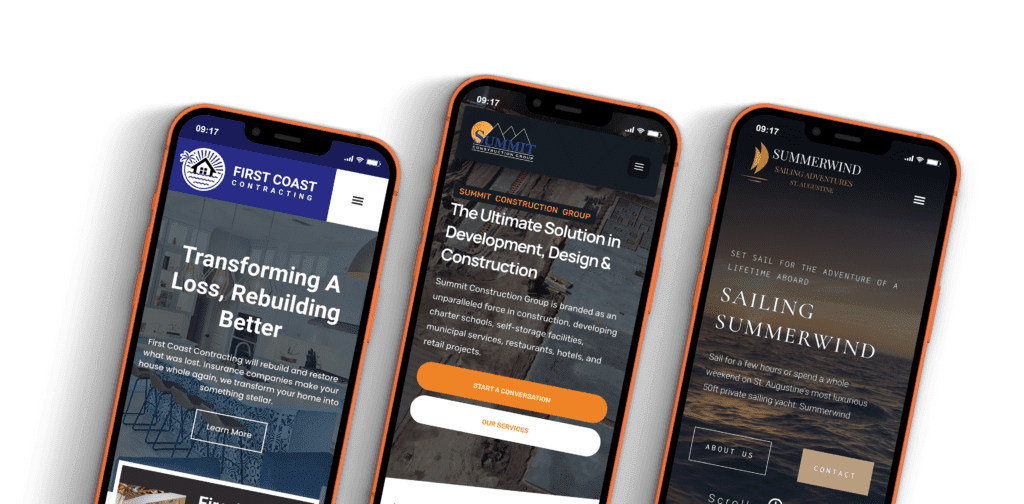
Creating an industry-leading website is about much more than “making it look pretty.” Before we start any website build, we always take a look at what your competitors are doing, establish your audience, and define your goals. This makes sure we deliver a site that not only speaks directly to your customer but makes you the obvious choice over the competition.
We’re on a mission to craft dynamic web solutions that blaze a clear trail, guiding your audience straight to your call to action. It’s all tailored just for you – captivating content, sleek design, and applications like custom databases or customer web portals. Throughout this dynamic journey, you’ll be at the forefront, ensuring we align with your business goals.
A great website is never finished, and we make sure we always build in a way that allows you to update your own content (with free training provided.) But you don’t have to do this alone! Our team of experts will help you get the most out of your online presence and make ourselves available to discuss further marketing efforts.
Could a new design make a site look better while leaving the main customer problem untouched? That can happen when decisions begin with visual preferences instead of visitor tasks. A prospective client may need to compare services, understand how to get started, or find a dependable way to make contact. If those paths remain confusing, a polished layout alone may not improve the experience.
Scope also matters. A focused refresh may suit a business with sound content and a workable platform, while a larger redesign may be appropriate when navigation, page structure, or conversion paths need broader attention. Ecommerce projects can involve additional platform and product-flow decisions. The specific platform, integrations, content needs, and technical work should be clarified before anyone treats the project as a fixed package.
A useful brief identifies the pages that matter, the information customers need, and the action each page should support. It also surfaces constraints such as existing platform access, brand materials, product data, and approval responsibilities. These details help reduce avoidable rework. No design can guarantee rankings, sales, or a particular volume of leads, so evaluate the work by its agreed deliverables and the experience it is designed to support.
What happens after you make contact? The first step is a conversation about your current website, business goals, audience, and the issues you want addressed. From there, the scope can identify page needs, platform considerations, content responsibilities, and the intended next steps for visitors. A clear agreement on deliverables and decision-makers gives both sides a practical basis for moving forward.
During design and development, client input helps keep the work grounded in how the business actually operates. You may need to supply or approve service details, images, brand assets, product information, and access to the current site or platform. Review points should be agreed as part of the scope so feedback can be collected and applied in an orderly way. Specific revision limits or technical inclusions should be confirmed before work begins.
How long delivery takes depends on the size of the site, content readiness, platform requirements, integrations, and how quickly approvals are provided. No project timeline is confirmed before those factors are understood. Before launch, clarify which checks, publishing tasks, and handoff support are included; ongoing maintenance or new features may require separate arrangements. This approach makes timing a project-specific discussion rather than an unsupported promise.
Would you rather know how decisions are made than hear a broad promise about results? Kris Chislett’s stated approach is collaborative, with client and team input supporting creative work. The business was founded in 2010. Its supplied credentials include Google Partner, Meta Business Partner, HubSpot Certified, and SEMrush Certified; these credentials do not, by themselves, guarantee a particular website outcome.
For a website project, useful evidence is the agreed scope, the reasoning behind page and navigation choices, and a clear account of what is ready to launch. Afterward, performance can be assessed against relevant goals, such as whether visitors can reach key information or complete intended actions. Analytics have limits: visits and clicks describe activity, but do not alone prove that the site generated business value.
Privacy and compliance should be discussed in relation to the tools and data involved. The supplied business profile identifies GDPR, CCPA, and CAN-SPAM, but no specific legal review or compliance certification for a website project is stated. Client and customer information is handled confidentially for agreed marketing work. Insurance coordination is not applicable because services are delivered digitally and do not require insurance involvement.
The timeline depends on the agreed scope, content readiness, platform needs, integrations, and approval pace. Those details need to be reviewed before a project schedule can be confirmed.
Bring your current website address, the main problem you want to solve, and any known platform or launch requirements. Existing content, brand assets, product details, and access information can help clarify scope, but you do not need a finished brief.
A focused refresh may fit when the platform and page structure work but parts of the experience need improvement. A broader redesign may be more suitable when navigation, content organization, or key customer paths need substantial changes; the right choice depends on an initial review and agreed goals.
Launch checks, publishing tasks, handoff, and ongoing maintenance should be confirmed in the project scope. Ask which items are included and which would require a separate arrangement before work begins.
Kris Chislett states that client and customer information is handled confidentially and used solely to deliver agreed marketing services. Discuss access, sensitive data, and any specific compliance requirements before sharing materials.
Every business should have a strong online presence. If you don’t, you’re leaving money on the table and sabotaging your own success. That’s where we come in. Let us help. In the ever-changing digital landscape, our coordinated marketing solutions help businesses navigate through the chaos, position themselves for success, and emerge as industry leaders.