
Before investing in a new site, check three things: Can visitors understand what you offer? Can they take the next step without friction? Can your team manage the site after launch? Website Design Pensacola FL should answer those questions with a practical plan, not just a fresh visual style. Kris Chislett works collaboratively with businesses to shape a website around its audience, content, and business goals.
The scope can include page structure, visual design, content organization, mobile usability, conversion paths, and launch preparation. Platform selection depends on what the site needs to do, who will update it, and whether it supports functions such as ecommerce or lead capture. Platform and feature decisions are discussed against your requirements; no specific platform is assumed before that conversation.
This work may suit small and medium-sized businesses, professional services, ecommerce brands, and service-based companies. It is a fit when your current site is hard to navigate, no longer reflects your offer, or makes it difficult for customers to contact or buy from you. A redesign is not automatically the right answer: sometimes the useful next step is clarifying content, priorities, or technical requirements first. When evaluating website design pensacola fl options, look for clear messaging, easy-to-use calls to action, and tools your team can manage after launch. These essentials help turn a polished site into a practical resource for visitors and your business.
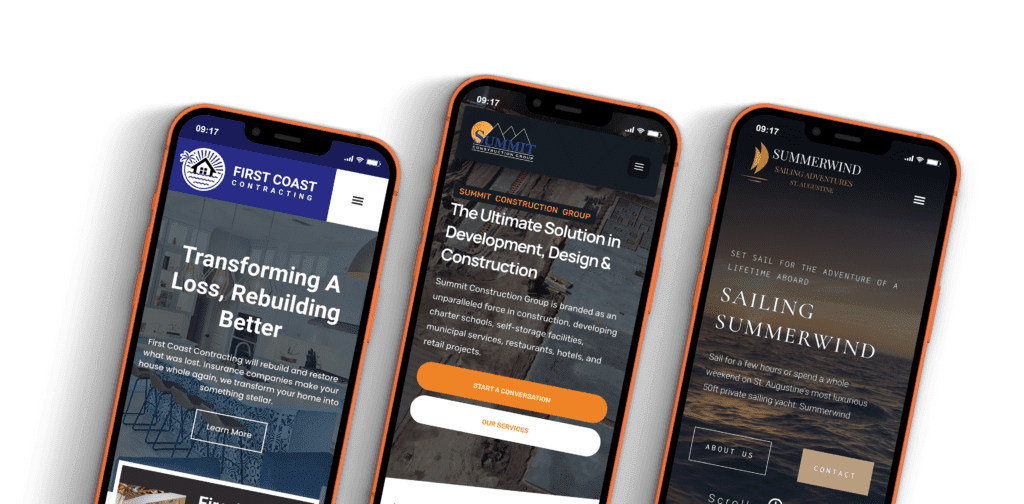
Creating an industry-leading website is about much more than “making it look pretty.” Before we start any website build, we always take a look at what your competitors are doing, establish your audience, and define your goals. This makes sure we deliver a site that not only speaks directly to your customer but makes you the obvious choice over the competition.
We’re on a mission to craft dynamic web solutions that blaze a clear trail, guiding your audience straight to your call to action. It’s all tailored just for you – captivating content, sleek design, and applications like custom databases or customer web portals. Throughout this dynamic journey, you’ll be at the forefront, ensuring we align with your business goals.
A great website is never finished, and we make sure we always build in a way that allows you to update your own content (with free training provided.) But you don’t have to do this alone! Our team of experts will help you get the most out of your online presence and make ourselves available to discuss further marketing efforts.
A site can look polished and still leave visitors unsure what to do. Confusing navigation, outdated information, unclear service descriptions, or a contact path buried several clicks deep can make a promising visit end without an inquiry. Those problems matter most when customers are comparing options, checking whether a business can meet their needs, or trying to complete a purchase.
The first step is identifying where the experience breaks down. Consider the pages customers need before making a decision, the questions they bring, and the action you want them to take. For an illustrative example, a service business may need a clearer path from a service overview to an inquiry form, while an ecommerce brand may need product information and checkout steps that are easy to follow. These are planning examples, not claims about past client work.
Design can improve clarity and usability, but it cannot guarantee search rankings, sales, or lead volume. Search visibility also depends on factors beyond the design itself, including content, technical setup, competition, and ongoing work. A sound project defines measurable goals such as clearer navigation, functional forms, or a smoother purchase path, then assesses those outcomes without treating clicks or impressions alone as proof of business growth.
Unclear requirements can create avoidable revisions and delay decisions. Work begins with a discussion of your audience, goals, current site, content, preferred platform, and required functions. That conversation helps define what is in scope, what materials you will provide, and which decisions need to be made before design advances.
Once scope is agreed, the work moves through practical milestones: organize the page structure, develop the design direction, review content and layouts, refine agreed items, and prepare the site for launch. Deliverables and revision expectations should be clarified for the project rather than assumed. Your input is important at review points, especially when confirming business details, approving content, and testing forms or other key actions.
Timing depends on the size of the site, the features involved, the condition of existing content, and how quickly feedback and materials are available. No fixed completion date is promised without reviewing those factors. Before launch, confirm access, domain and platform responsibilities, essential page content, and the actions visitors should be able to complete. Any post-launch support should be discussed as part of the agreed scope.
Choosing a designer means trusting someone with your brand, content, and customer experience. Kris Chislett has worked under the business name since 2010 and describes the approach as collaborative: ideas are developed with clients rather than in isolation. That matters when the project depends on business knowledge only your team can provide, from customer questions to the details that distinguish your offer.
Relevant credentials include Google Partner, Meta Business Partner, HubSpot Certified, and SEMrush Certified. These qualifications relate to digital marketing platforms and tools; they are not a guarantee of a particular website result or a substitute for agreeing on design scope. The practical value is a broader understanding of how a site may connect with marketing and measurement needs.
Website projects are delivered digitally, so insurance coordination is not applicable. GDPR, CCPA, and CAN-SPAM are among the stated compliance standards, but a website project still needs a clear discussion of the data it collects and the tools it uses. Legal requirements depend on the specific business and implementation; do not treat design work as legal advice or assume compliance without reviewing the finished setup.
The timeline depends on site size, features, content readiness, and how quickly feedback is provided. The schedule can be discussed after reviewing your requirements and agreeing on milestones.
Avoid starting without a clear audience, priority pages, and a defined action you want visitors to take. Also confirm who will provide content, approve decisions, and manage the site after launch.
Either option can carry risk if requirements, access, content, or launch responsibilities are unclear. Reviewing the current site and identifying what must be preserved helps determine whether targeted updates or a redesign better fits the need.
Post-launch updates and maintenance depend on the agreed project scope. Before launch, clarify who manages the platform, account access, content changes, and any support you may need afterward.
Client and customer information is handled confidentially and used solely to deliver agreed marketing services. Discuss the data your site collects, the tools involved, and account access as part of project planning.
Every business should have a strong online presence. If you don’t, you’re leaving money on the table and sabotaging your own success. That’s where we come in. Let us help. In the ever-changing digital landscape, our coordinated marketing solutions help businesses navigate through the chaos, position themselves for success, and emerge as industry leaders.