
A website can look polished and still leave a potential customer unsure what to do next. Website Design Port St Lucie FL from Kris Chislett focuses on the practical decisions that make a site easier to understand: what visitors need to know, where they should go, and how they can take the next step.
This service may fit small and medium-sized businesses, professional services, ecommerce brands, and service-based companies that need a new site or a considered redesign. The work is planned around your business goals and audience, rather than adding features simply because they are fashionable. Port St. Lucie clients can work with Kris Chislett remotely; the page does not imply a local office or in-person team.
Before discussing design, it helps to identify the site’s main job. That might be explaining a service, helping shoppers assess products, making contact details easy to find, or creating a more coherent path from an entry page to an inquiry. A clear goal gives both sides a useful basis for deciding what belongs in the project and what can wait. Effective website design port st lucie fl should pair a polished look with clear navigation and calls to action, helping visitors understand your services and take the next step. Kris Chislett focuses on these practical choices to make websites easier to use.
Creating an industry-leading website is about much more than “making it look pretty.” Before we start any website build, we always take a look at what your competitors are doing, establish your audience, and define your goals. This makes sure we deliver a site that not only speaks directly to your customer but makes you the obvious choice over the competition.
We’re on a mission to craft dynamic web solutions that blaze a clear trail, guiding your audience straight to your call to action. It’s all tailored just for you – captivating content, sleek design, and applications like custom databases or customer web portals. Throughout this dynamic journey, you’ll be at the forefront, ensuring we align with your business goals.
A great website is never finished, and we make sure we always build in a way that allows you to update your own content (with free training provided.) But you don’t have to do this alone! Our team of experts will help you get the most out of your online presence and make ourselves available to discuss further marketing efforts.
What makes a website feel ineffective to a customer? Often, it is not one dramatic flaw but a string of small uncertainties: unclear service descriptions, hard-to-find contact information, confusing menus, or pages that do not explain what happens after a visitor reaches out. Those gaps can make a business harder to evaluate, even when its services are a strong fit.
A redesign is worth considering when the current site no longer reflects the business, important information is difficult to maintain, or visitors have no obvious route to an inquiry or purchase. It is also reasonable to keep a site that already serves its purpose. The first decision is whether the problem is visual, structural, content-related, or outside the website altogether.
Scope matters because more pages and features bring more content, review, and setup work. A focused site can be easier to manage than an oversized build, while an ecommerce project may need product and checkout considerations that a service-business site does not. The right plan depends on your audience, existing materials, platform needs, and who will maintain the site after launch.
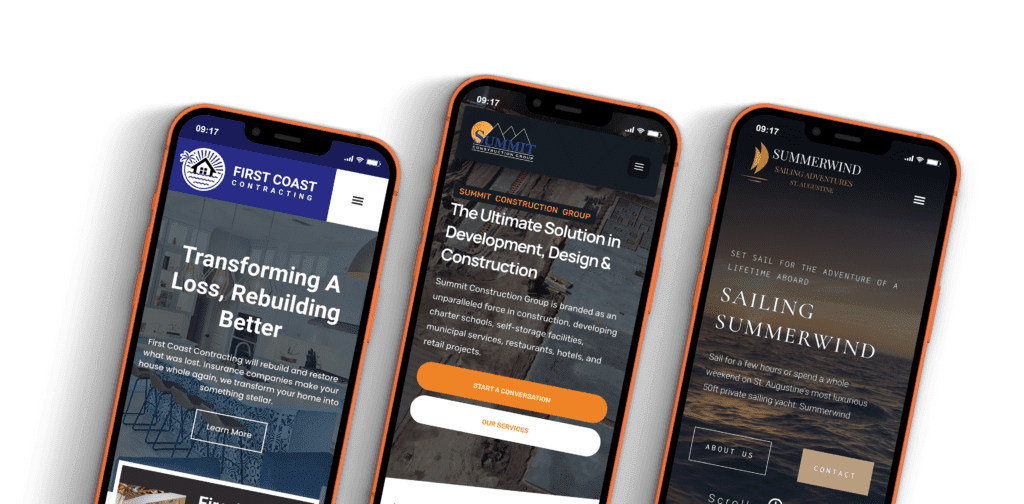
How does the work move from an idea to a usable website? The steps below give the project a shared structure, while the exact scope and schedule depend on the pages, platform, content, and functionality agreed at the outset. No fixed delivery date is promised before those details are understood. 1. Define the goal: discuss your audience, current site concerns, priorities, and what a useful outcome should enable.
2. Set the structure: agree on key pages, navigation, content needs, and the main actions visitors should be able to take. 3. Develop the design direction: review how the content, layout, and visual choices support that journey. Your timely feedback helps keep decisions clear and prevents avoidable rework.
4. Build and review: implement the agreed design and pages, then check the work against the approved scope. Deliverables may include page layouts, website content placement, responsive design implementation, and launch preparation when those items are part of the agreement. Specific platform setup, integrations, copywriting, migration, and ongoing maintenance should be clarified before work begins rather than assumed.
5. Prepare for launch: confirm responsibilities for access, content, approvals, and any third-party tools. Timing can change if materials arrive late, requirements expand, or an external platform needs attention. After launch, any included support and handoff details should be documented in the project agreement.
What can you use to assess the working relationship before committing? Kris Chislett was founded in 2010 and describes its approach as collaborative: ideas develop through work with clients, not in isolation. In practical terms, that means project goals, priorities, and review points should be discussed together so the design reflects the business rather than assumptions about it.
The supplied credentials are Google Partner, Meta Business Partner, HubSpot Certified, and SEMrush Certified. They indicate platform-related qualifications, but they are not a guarantee of a particular website outcome or a substitute for agreeing on the actual design scope. Ask how each proposed deliverable connects to your needs and what is excluded.
A website can support clearer communication and easier customer actions, but design alone cannot guarantee search rankings, sales, or a specific volume of leads. If performance measurement is part of the agreed work, discuss which actions can be tracked and what the data can and cannot show. Visits and clicks are useful signals, not proof by themselves that business results improved.
Compare the defined deliverables, platform assumptions, revision process, content responsibilities, launch preparation, and post-launch support. Also ask how the proposed structure helps visitors understand your offer and take the intended action. A lower or higher price is difficult to evaluate without matching scope.
Warranty and post-launch support terms are not specified in the available business information. Ask which corrections, if any, are covered after launch, for how long, and whether maintenance or platform updates are separate services. Have the agreed terms documented before work begins.
Yes, the service can be discussed and delivered remotely; no local office or in-person service is claimed. You can share project materials and feedback online, then agree on communication and review arrangements. Kris Chislett is available Monday to Friday.
The schedule depends on the agreed page count, functionality, platform, content readiness, review pace, and any third-party requirements. A delivery timeframe should be discussed after the project scope is clear. No fixed timeline is promised in advance.
A project-specific price depends on the pages, design needs, content, platform, ecommerce or integration requirements, and support requested. No pricing is provided here, so contact Kris Chislett to discuss the scope before evaluating cost.
The supplied privacy statement says client and customer information is handled confidentially and used solely to deliver agreed marketing services. Share only what is needed to define the project, and agree on a secure way to transfer sensitive access details. Ask how any site-specific data collection or third-party tools will be handled.
Every business should have a strong online presence. If you don’t, you’re leaving money on the table and sabotaging your own success. That’s where we come in. Let us help. In the ever-changing digital landscape, our coordinated marketing solutions help businesses navigate through the chaos, position themselves for success, and emerge as industry leaders.