
A visitor should be able to understand what your business offers and how to take the next step without having to work it out. Website Design Spring Hill FL is a practical fit for businesses whose current site feels dated, difficult to use, unclear on mobile, or disconnected from how customers actually make decisions.
Kris Chislett works with small and medium-sized businesses, professional services, ecommerce brands, and service-based companies. The work starts by clarifying what the site needs to do: explain services, support product discovery, answer common questions, or guide visitors toward an inquiry or purchase. A design decision should serve that purpose, not just add visual polish.
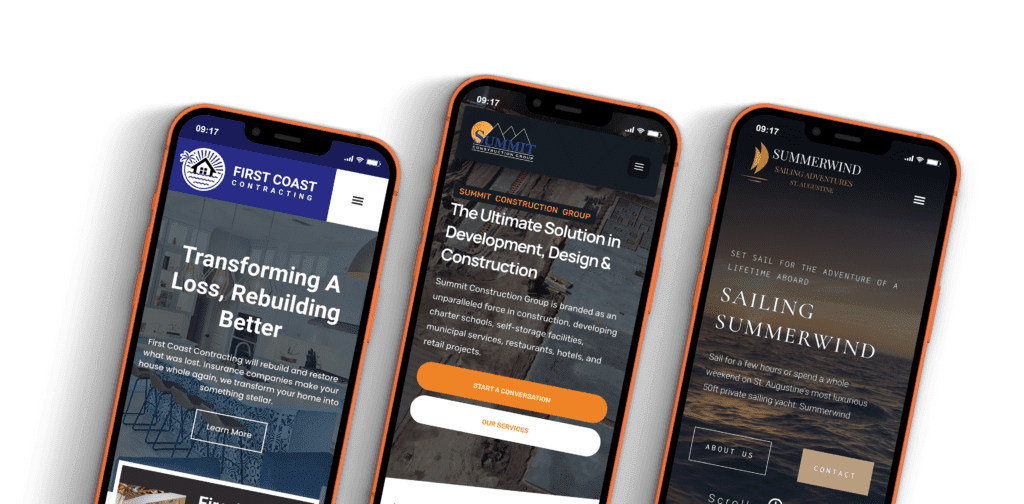
Website design can cover page structure, content organization, visual direction, responsive layouts, and conversion paths. The exact deliverables depend on the project and agreed scope. This is a collaborative service, so clients contribute business knowledge, feedback, and the materials needed to represent their offer accurately. website design spring hill fl can help local businesses present their services clearly and guide visitors toward a call, booking, or inquiry. A well-organized site makes it easier for potential customers to understand what you offer and take the next step.
Creating an industry-leading website is about much more than “making it look pretty.” Before we start any website build, we always take a look at what your competitors are doing, establish your audience, and define your goals. This makes sure we deliver a site that not only speaks directly to your customer but makes you the obvious choice over the competition.
We’re on a mission to craft dynamic web solutions that blaze a clear trail, guiding your audience straight to your call to action. It’s all tailored just for you – captivating content, sleek design, and applications like custom databases or customer web portals. Throughout this dynamic journey, you’ll be at the forefront, ensuring we align with your business goals.
A great website is never finished, and we make sure we always build in a way that allows you to update your own content (with free training provided.) But you don’t have to do this alone! Our team of experts will help you get the most out of your online presence and make ourselves available to discuss further marketing efforts.
A confusing website can make a capable business look harder to contact or buy from than it really is. Visitors may miss important service details, struggle to find contact information, or leave because the path from first impression to action is unclear. A redesign is worth considering when those problems reflect a real mismatch between the site and the way the business serves customers.
Common triggers include a business changing its services, adding products, or finding that the existing pages no longer explain its value. Before choosing a platform or visual style, it helps to identify the main audience, essential pages, content gaps, and actions the site should support. Those decisions shape both the design and the amount of work involved.
A new site does not automatically solve weak messaging, operational delays, or a lack of demand. Nor do clicks and page views alone prove that a design is producing business value. Agree on useful measures for the project, such as whether visitors can find key information or complete a defined inquiry path, and interpret analytics alongside lead quality and business context.
A well-scoped project makes decisions easier and reduces avoidable rework. The work can be organized into five practical steps, adjusted to the agreed needs of the business and the existing website, if there is one. Timing is not fixed in advance: it depends on scope, content readiness, platform requirements, feedback, and any technical dependencies.
1. **Clarify goals and scope.** Discuss the audience, business priorities, current-site concerns, required pages, and the action visitors should take. This establishes what the project includes and what should remain outside its scope, such as separate marketing services or technical work not agreed for the design engagement.
2. **Plan the structure and content.** Map the pages and key information before settling visual details. The client supplies accurate business information, existing brand assets, product or service details, and any required approvals. Clear, timely feedback helps keep decisions moving; missing content or delayed approvals can affect the schedule.
3. **Develop the design direction.** The agreed structure becomes a visual and usability plan for the site. Platform choices depend on the project’s content, functionality, and the client’s ability to manage the site; a platform is not selected simply because it is popular. Any platform configuration or integrations should be confirmed as part of scope.
4. **Review and refine.** The client reviews the agreed pages and provides consolidated feedback. The number and type of revisions should be established before work begins, so both sides understand what is included and how additional requests will be handled. Accurate copy and prompt decisions make this stage more useful.
5. **Prepare for launch.** The final handoff and launch support depend on what has been agreed. Confirm who is responsible for content entry, domain or hosting access, testing, and any ongoing maintenance before launch. No fixed completion date is promised here; Kris Chislett can discuss a realistic schedule after understanding the project requirements.
Yes, the service is delivered digitally and can be discussed remotely with a Spring Hill business. No local office or in-person meeting is implied; the project can focus on your audience, content, and site requirements.
The cost depends on the project’s scope and requirements. Page count, content readiness, platform setup, integrations, and launch support all affect the work involved, so share those details to discuss an appropriate scope.
Prepare your current website address, business goals, key services or products, and any brand or content materials you already have. A list of customer questions and the actions you want visitors to take can also help clarify priorities.
The schedule depends on scope, content readiness, platform needs, feedback, and technical dependencies. Kris Chislett can discuss a realistic timeline after reviewing the project rather than promising a fixed completion date upfront.
Confirm the included design deliverables, revision expectations, launch responsibilities, and any post-launch support before work begins. Domain, hosting, content entry, testing, and maintenance responsibilities should also be clear in the agreed scope.
Every business should have a strong online presence. If you don’t, you’re leaving money on the table and sabotaging your own success. That’s where we come in. Let us help. In the ever-changing digital landscape, our coordinated marketing solutions help businesses navigate through the chaos, position themselves for success, and emerge as industry leaders.